Choosing the right archery draw weight is one of the most important decisions you'll make as an archer. Too heavy and you'll develop bad habits, struggle with accuracy, and risk injury. Too light and you won't have enough energy for your intended purpose. This comprehensive draw weight guide helps you find the perfect poundage for your body, experience level, and shooting goals.
⚡ Key Takeaways
- • Start lighter than you think—you can always increase draw weight later
- • Most adult beginners should start at 20-30 lbs for recurve, 40-50 lbs for compound
- • Being over-bowed is the #1 beginner mistake and leads to poor form
- • Increase draw weight by no more than 2-4 lbs at a time
💪 What Is Draw Weight?
Draw weight (also called bow draw weight or poundage) is the amount of force required to pull the bowstring back to full draw. It's measured in pounds (lbs) and is one of the key specifications of any bow.
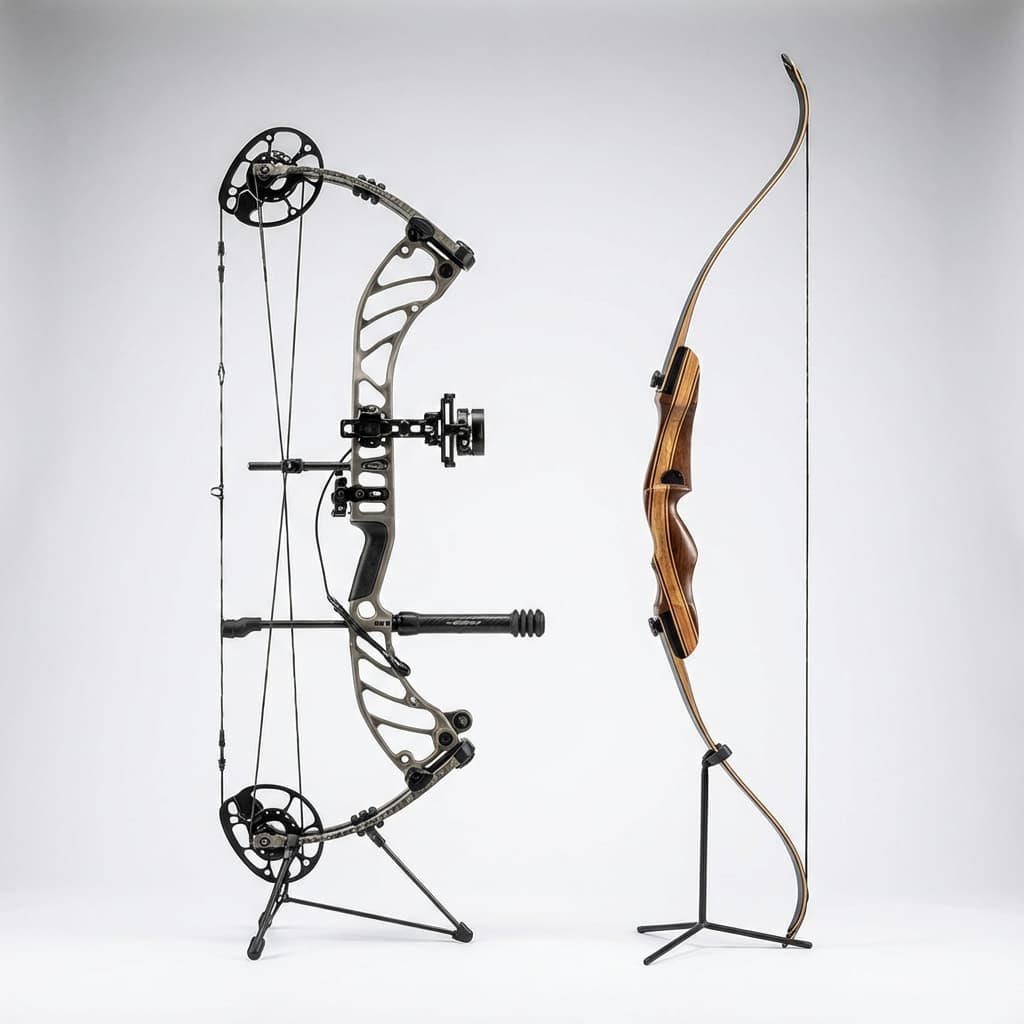
For recurve bows, draw weight is typically measured at a standard 28-inch draw length. If your draw length is longer or shorter, the actual weight you pull will be different—roughly 2 pounds more or less for each inch of difference. For compound bows, draw weight is the peak weight before let-off kicks in, and it's adjustable via limb bolts.
Draw Weight Terminology
- • Peak weight — the maximum force during the draw cycle
- • Holding weight — the force at full draw (compound bows have let-off reducing this)
- • Let-off — percentage of peak weight reduced at full draw (compound only, typically 75-85%)
- • Stacking — when draw weight increases dramatically near full draw (recurve bows)
- • IBO rating — bow speed measured at specific draw weight (usually 70 lbs)
📊 Recommended Draw Weights by Age, Gender, and Experience
The following draw weight chart provides starting recommendations. These are guidelines, not rules—individual strength, fitness, and body type all play a role. When in doubt, go lighter.
Recurve Bow Draw Weight Recommendations
Compound Bow Draw Weight Recommendations
Pro Tip: The right draw weight is one you can draw smoothly, hold at full draw for at least 30 seconds without shaking, and let down slowly and controlled. If you can't do all three, the weight is too heavy.
🎯 Draw Weight for Hunting vs Target Archery
Your intended use dramatically affects what draw weight you should use. Target shooting and hunting have very different requirements.
🎯 Target Archery
- • Lower draw weights are perfectly fine
- • Prioritize comfort and shot volume
- • Olympic recurve archers shoot 38-50 lbs
- • Compound target archers often use 50-60 lbs
- • Accuracy matters more than arrow speed
- • You shoot hundreds of arrows per session
🦌 Hunting
- • Most states require minimum 40 lbs (check local laws)
- • Recommended: 45-55 lbs for deer, 55-70 lbs for elk
- • Kinetic energy matters for ethical kills
- • Need enough penetration through hide and bone
- • Must be able to draw silently from awkward positions
- • You only take a handful of shots in the field
⚠️ Minimum Hunting Draw Weights (Check Local Regulations)
- • Small game — 25-35 lbs minimum
- • Whitetail deer — 40 lbs minimum (most states)
- • Elk / moose — 50 lbs minimum recommended
- • African game — 70+ lbs for large dangerous game
📈 How to Increase Draw Weight Safely
Increasing bow draw weight should be a gradual process. Rushing leads to injury, bad form, and frustration. Here's the proven approach used by coaches and experienced archers.
Safe Draw Weight Progression
- 1. Master current weight first. You should be able to hold full draw for 30 seconds comfortably and shoot 60+ arrows without fatigue before increasing.
- 2. Increase by 2-4 lbs maximum. For recurve, this means new limbs. For compound, turn limb bolts in by half turns.
- 3. Reduce arrow volume initially. At the new weight, shoot 50-70% of your normal arrow count for the first 2 weeks.
- 4. Focus on form, not score. Your groups may open up temporarily. That's normal—don't chase points during the transition.
- 5. Wait at least 4-6 weeks before considering another increase. Your muscles and connective tissue need time to adapt.
- 6. Do supplemental exercises. Back rows, reverse flys, and resistance band work accelerate the strengthening process.
Pro Tip: If you shoot recurve with an ILF (International Limb Fitting) system, you can buy limbs in 2-lb increments. Some clubs also have limb libraries where you can borrow different weights to test before buying.
🚨 Over-Bowed Syndrome: The #1 Beginner Mistake
Being over-bowed—using a bow with too much draw weight—is the single most common mistake in archery. It's driven by ego, misinformation, and the misconception that more power equals better archery. Here's why it's so damaging:
Sky Drawing
Pointing the bow upward to start the draw because you can't pull it back straight. This is dangerous and a huge safety violation at any range. If you must sky draw, the bow is too heavy.
Muscle Compensation
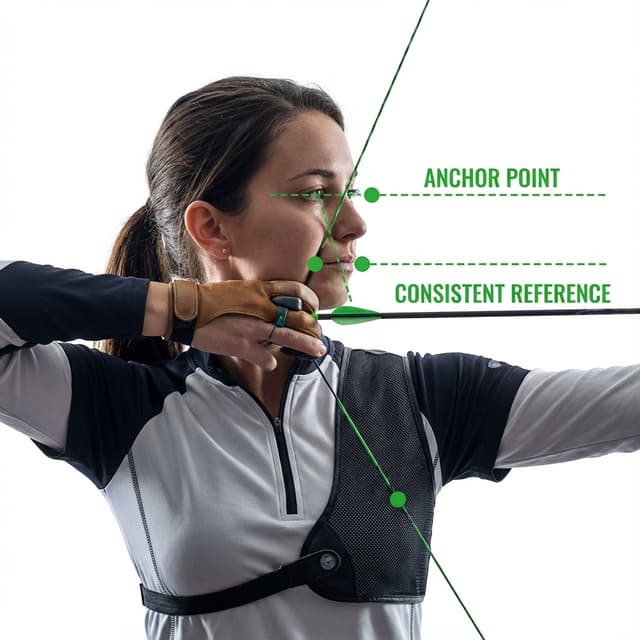
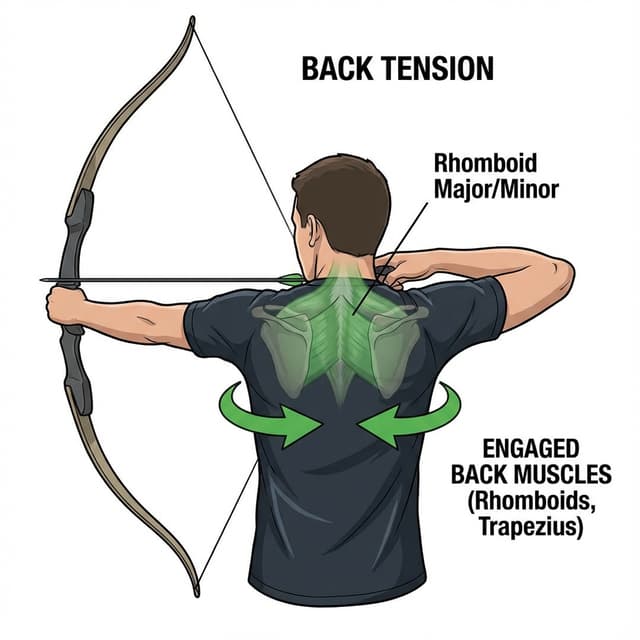
When the bow is too heavy, your body recruits the wrong muscles—shoulders rise, back disengages, arms do all the work. This builds terrible habits that are extremely hard to break later.
Rushed Shots
Over-bowed archers can't hold at full draw long enough to aim properly. They snap-shoot, punching the trigger or releasing fingers the moment they reach anchor. This leads to target panic and terrible accuracy.
Injury Risk
Rotator cuff strains, shoulder impingement, elbow tendinitis, and back injuries are all common in over-bowed archers. These injuries can sideline you for weeks or months.
✅ Signs Your Draw Weight Is Right
- • You can draw the bow smoothly while pointing at the target (no sky drawing)
- • You can hold full draw for 30+ seconds without trembling
- • You can let the bow down slowly and under control at any point
- • You can shoot 60-80 arrows without your form degrading
- • Your shoulders stay down and relaxed through the entire shot cycle
📋 Complete Draw Weight Reference Chart
This comprehensive draw weight chart shows the typical progression path from beginner through advanced for different archery disciplines.
Recurve Target Archery Progression
❓ Frequently Asked Questions
What draw weight should I start with as a complete beginner?▼
Does a higher draw weight mean more accuracy?▼
Can I adjust draw weight on my bow?▼
How does draw length affect draw weight?▼
Log Your Draw Weight Progress
ArcheryBuddy tracks your equipment settings and scores over time, so you can see exactly how draw weight changes impact your performance.