Your archery draw length is one of the most critical measurements in the sport. Get it wrong, and every aspect of your shooting suffers—from accuracy and consistency to comfort and injury risk. This guide walks you through exactly how to measure draw length using multiple proven methods, so you can find the perfect fit for your bow setup.
⚡ Key Takeaways
- • Draw length is the distance from the nock point to the pivot point of the grip, plus 1.75"
- • The wingspan method gives a quick estimate: arm span ÷ 2.5
- • Incorrect draw length causes poor accuracy, fatigue, and potential injury
- • Always verify with an actual draw on a draw length indicator arrow
📏 What Is Archery Draw Length?
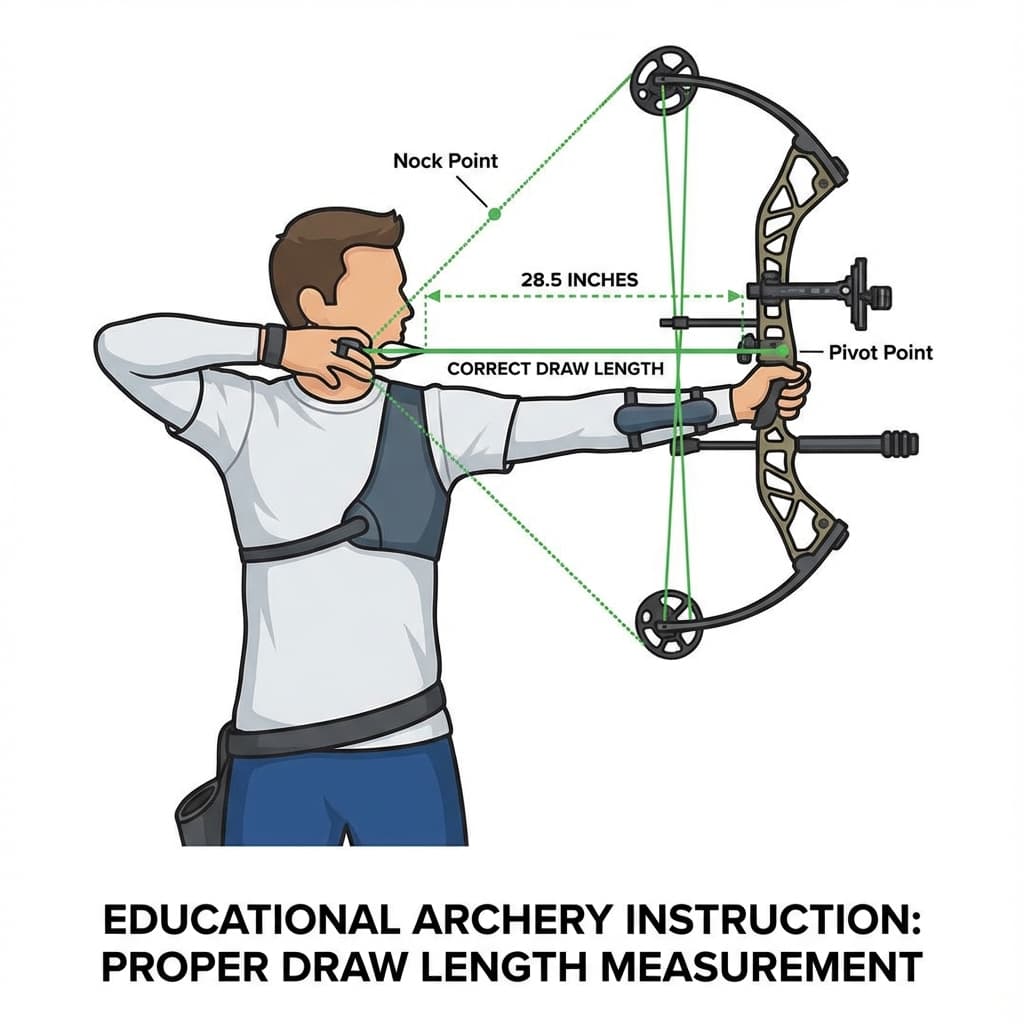
Draw length is the distance you pull the bowstring back when at full draw. According to the Archery Trade Association (ATA), it's officially measured from the nock point on the string to the pivot point of the grip (the deepest part of the grip), plus 1.75 inches. That extra 1.75 inches accounts for the distance from the grip to the front of the bow riser.
For compound bows, draw length is set mechanically by the cam system. For recurve bows and longbows, draw length is determined entirely by the archer's body and form. Either way, knowing your correct draw length measurement is the starting point for any bow purchase or setup.
ATA Standard Draw Length Definition
The official ATA measurement is taken with the bow at full draw:
- • Measure from the nock point (where the arrow clips onto the string)
- • To the pivot point of the grip (deepest part of the throat)
- • Add 1.75 inches to get the official draw length
- • Most compound bows are sold in half-inch increments (27", 27.5", 28", etc.)
🎯 Why Draw Length Matters So Much
Shooting with the wrong draw length is like wearing shoes two sizes too big—you can technically do it, but everything feels off and your performance suffers dramatically.
❌ Too Long Draw Length
- • Overextended bow arm (locked elbow)
- • Anchor point too far back on face
- • Head tilts backward to reach anchor
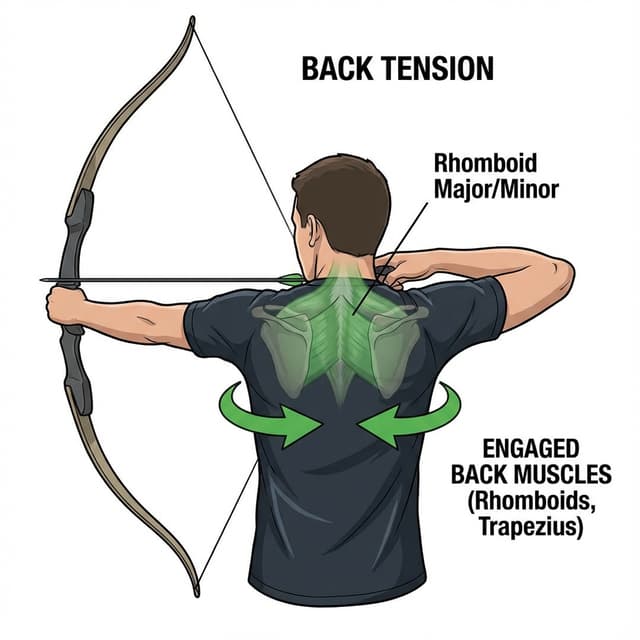
- • Poor back tension engagement
- • String slaps on forearm
- • Shoulder strain and fatigue
❌ Too Short Draw Length
- • Cramped, hunched posture
- • Bent bow arm (chicken wing)
- • Reduced arrow speed and energy
- • Inconsistent anchor point
- • Difficulty reaching full draw
- • Reduced accuracy potential
✅ Correct Draw Length
- • Bow arm has slight bend in the elbow—never locked
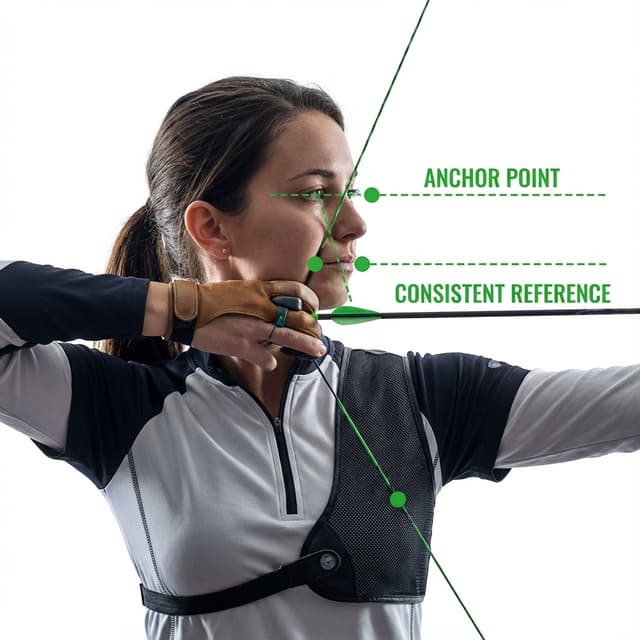
- • Anchor point feels natural—no straining forward or back
- • Good back tension—shoulder blades can squeeze together
- • Consistent peep alignment—clear sight picture every time
- • Comfortable hold—you can hold full draw for 10+ seconds without shaking
🤲 Method 1: The Wingspan (Arm Span) Method
The wingspan method is the most popular draw length calculator technique because it's quick, easy, and reasonably accurate for most people. It works as a starting point, though you should always verify with an actual draw.
How to Measure Using Wingspan
- 1. Stand with your back against a wall, arms extended straight out to each side
- 2. Keep your palms facing forward, fingers extended (don't stretch or strain)
- 3. Have someone measure from middle fingertip to middle fingertip
- 4. Divide that number by 2.5
- 5. The result is your estimated draw length in inches
Pro Tip: If your wingspan measurement falls between sizes (e.g., 28.3"), round down to the nearest half inch (28"). It's almost always better to be slightly short than slightly long on draw length.
Quick Reference: Wingspan to Draw Length
🏹 Method 2: The Draw-to-Chin Method
This method simulates the actual drawing motion and can be more accurate than the wingspan method for some archers. You'll need a yardstick or a long arrow with measurement markings.
Steps for the Draw-to-Chin Method
- 1. Hold a yardstick or measuring arrow in your bow hand, extending it straight out
- 2. The "0" end should be at the front of your bow hand (where the grip pivot point would be)
- 3. With your other hand, draw the yardstick back to the corner of your mouth
- 4. Keep proper archery posture—square stance, upright torso
- 5. Have someone read the measurement at the corner of your mouth
- 6. Add 1.75 inches for the ATA standard draw length
📐 Method 3: ATA Standard Measurement (Most Accurate)
The most accurate way to determine your draw length is to use a draw length indicator arrow (sometimes called a draw check arrow) on an actual bow. This is what pro shops use, and it gives you the definitive measurement.
Using a Draw Length Indicator Arrow
- 1. Visit a pro shop—they'll have a lightweight bow and a marked indicator arrow
- 2. Draw the bow using proper form with good anchor and back tension
- 3. Have the technician read the measurement at the back of the riser
- 4. Repeat 3-5 times to confirm consistency
- 5. The reading plus 1.75" equals your ATA draw length
Pro Tip: Your draw length can change over time. As your form improves, especially anchor point and back tension, your effective draw length may shift by 0.5-1 inch. Re-measure every 6-12 months, especially in your first two years.
🔧 Adjusting Draw Length for Different Bow Types
Your measured draw length applies differently depending on whether you shoot a compound bow or a recurve bow. Here's how to adapt your measurement for each type. For a deeper comparison of bow types, check out our compound vs recurve bow comparison.
Compound Bow
- • Draw length is set mechanically via cam modules
- • Must match your measured draw length exactly
- • Adjustable in 0.5" increments on most bows
- • The "wall" stops you at the set draw length
- • Incorrect module = forced into wrong draw length
Recurve / Longbow
- • No mechanical stop—you draw as far as your anchor
- • Draw length determines arrow length (add 1-2" for safety)
- • Affects bow size selection (short/medium/long limbs)
- • Draw weight changes with draw length (~2 lbs per inch)
- • More forgiving of slight draw length variations
⚠️ Common Draw Length Mistakes
Choosing Too Long for "Extra Speed"
Some archers set draw length too long, thinking a longer draw gives more speed. While technically true, the loss of accuracy and consistency far outweighs any speed gain. A well-aimed slow arrow beats a fast miss every time.
Measuring with Bad Form
If you measure draw length while hunching, leaning, or using improper anchor, you'll get the wrong number. Always measure with proper stance and posture. Beginners should have an instructor present.
Never Re-Measuring
Your draw length can change as your form develops, your fitness changes, or as you age. What was correct last year may not be correct today. Schedule periodic draw length checks.
Using Only the Wingspan Method
The wingspan method is an estimate, not gospel. People with long torsos and short arms (or vice versa) can get significantly different results. Always verify with an actual draw on a bow.
🎯 How Draw Length Affects Accuracy
Even a half-inch error in draw length can compound into significant accuracy problems. Here's the chain reaction that happens when your draw length is off:
The Accuracy Chain
- • Wrong draw length → inconsistent anchor point → sight picture changes shot to shot
- • Too long → locked bow arm → bow torques on release → left/right misses
- • Too short → poor back tension → creeping forward → low hits
- • Any error → compensating muscles → fatigue → groups open up over a session
At 20 yards, a draw length that's 1 inch too long can cause groups to open up by 3-5 inches compared to correct draw length. At 60 yards, that error multiplies to 9-15 inches—the difference between hitting a bullseye and missing the target entirely.
❓ Frequently Asked Questions
Can I measure draw length by myself?▼
Does draw length change as I get better?▼
What if I'm between two draw length sizes?▼
Is draw length the same as arrow length?▼
Track Your Setup and Scores
ArcheryBuddy lets you log your equipment settings—including draw length—and track how changes affect your scores over time.